Bra Styles Explained: The Right Bra for Every Outfit
From plunge to balconette to strapless, learn what each bra style does, which one to wear with every neckline, and how to build a small lingerie wardrobe that covers everything.
Read articlePopular searches
Fabric & Care
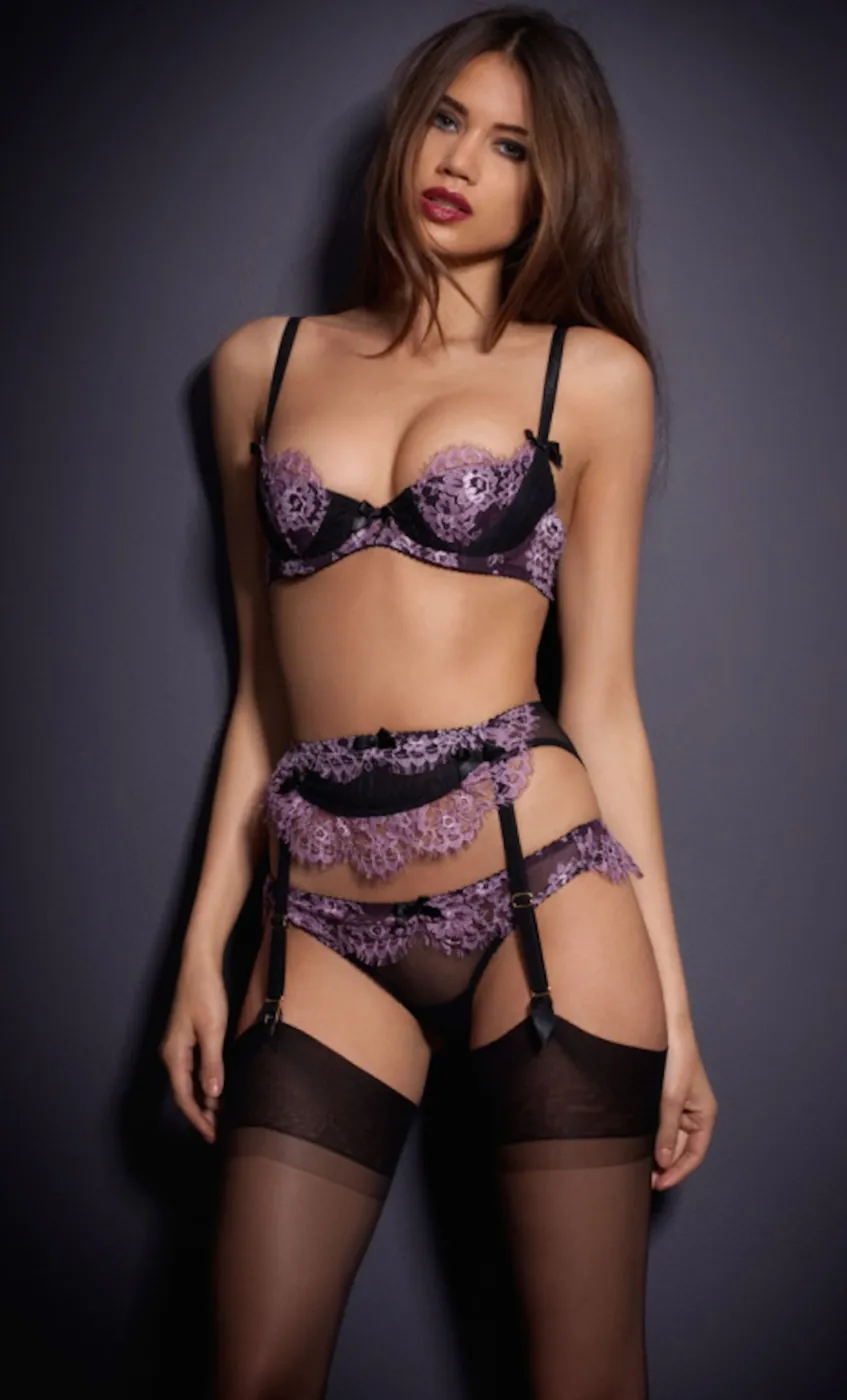
Two bras can share the same size, the same color and almost the same shape, yet feel completely different on your body. The reason is almost always fabric. The textiles in your lingerie decide how it breathes, how much it stretches, whether it shows under a fitted dress, how it responds to warmth and movement, and how many washes it will survive before it loses its charm. Understanding fabric is the quiet secret behind a drawer full of pieces you genuinely love to wear.
In this guide we unpack the materials you will find across lingerie, from heirloom-style laces to silky satins, airy mesh and the smooth microfibers that disappear under clothing. You will learn what each fabric does best, where it falls short, how to spot quality when you shop, and how to match your choices to the season, your skin and the moment you are dressing for.
Lingerie sits closer to your skin than anything else you own, often for twelve hours or more a day. That makes fabric more than an aesthetic choice. It shapes your comfort in four practical ways:
Most lingerie combines several fabrics: a lace outer, a mesh wing, a microfiber lining, a cotton gusset and elastic trims. Knowing each layer helps you read a product description like a stylist.
Lace is an openwork fabric in which a pattern is formed by the spaces between threads as much as by the threads themselves. It carries centuries of craft, and today it comes in several distinct families.
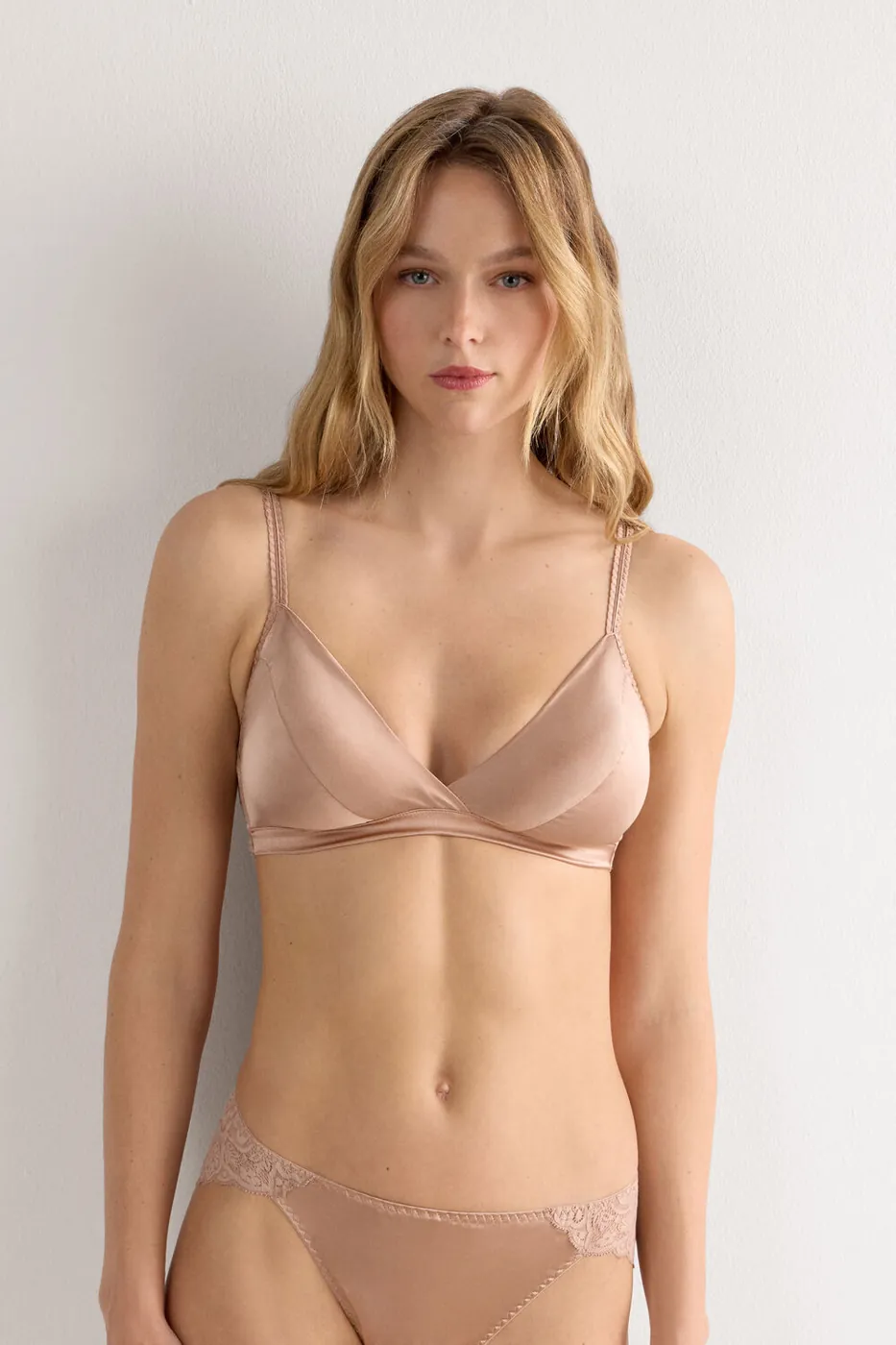
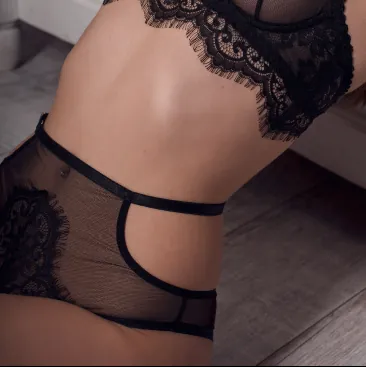
Leavers lace is made on traditional Leavers machines, a slow and intricate process that produces extremely fine, detailed designs. Chantilly lace, named after the French town, is a style of fine lace known for delicate floral motifs on a sheer hexagonal net, typically outlined with a slightly heavier thread called a cordonnet. These laces are soft, lightweight and have a refined, almost weightless drape. They are usually non-stretch or very lightly stretch, so they are often paired with a stretch mesh or placed on areas that do not need to move much.
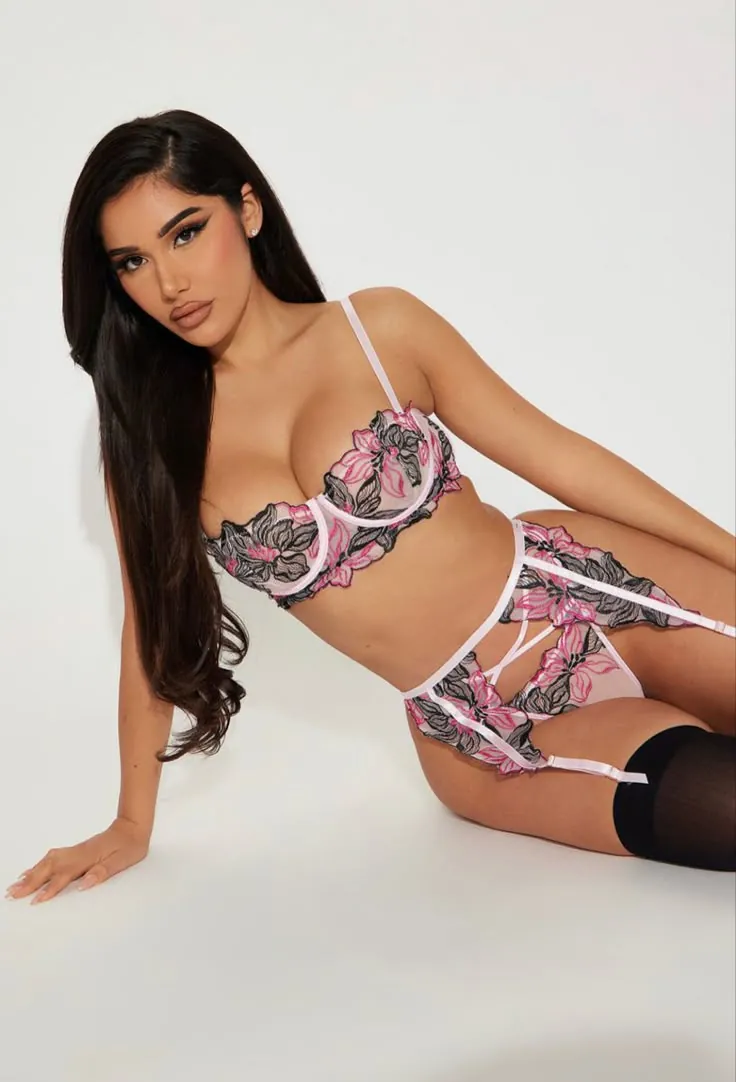
Embroidered lace is created by stitching a design onto a base fabric, usually a fine tulle or mesh. The result has raised, tactile texture and can include tonal threads, scallops and even small appliqués. It is beautiful on bra cups and garter belts, where the pattern can be showcased. Our Rosé Embroidered Garter Set uses this technique for a dimensional, romantic finish.
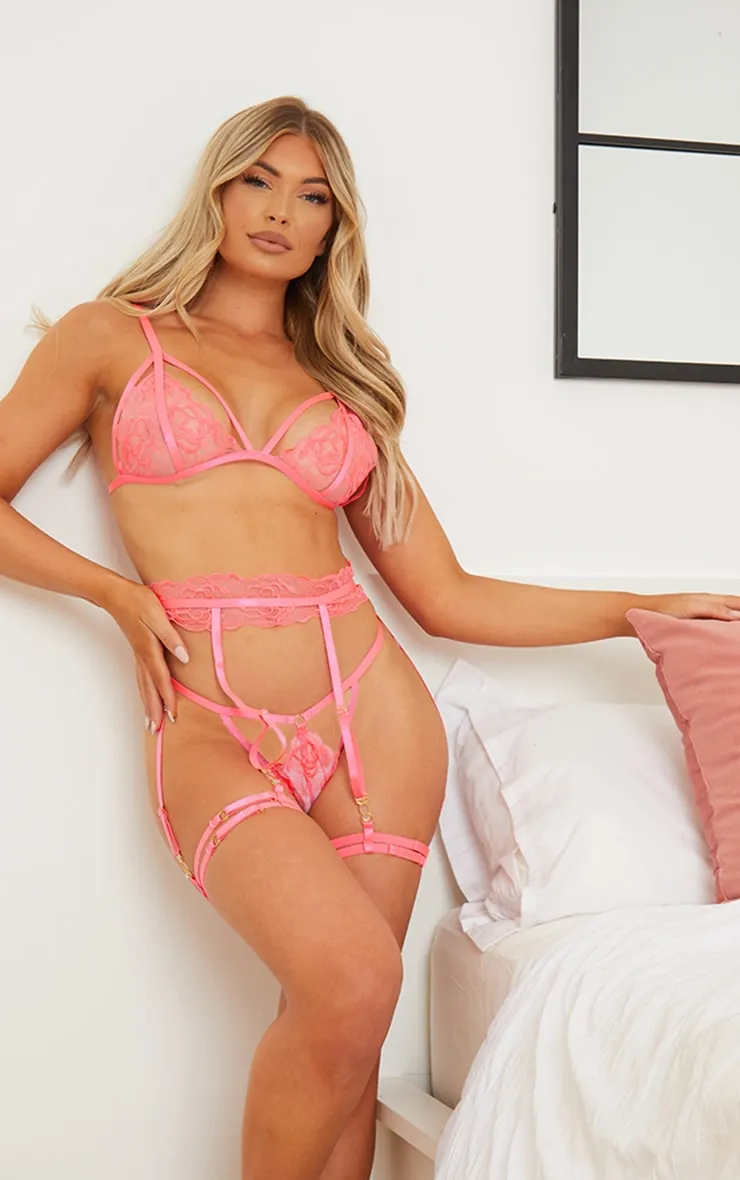
Stretch lace is knitted with elastane, which makes it soft, flexible and forgiving. It is the workhorse of everyday lace lingerie, used for bralettes, briefs and whole-body pieces. Galloon lace has scalloped edges on both sides, so it can be used as a finished edge without extra trim. That is why so many lace briefs and bralettes have that pretty scalloped border that lies flat against the skin. The Cloud Lace Bralette & Thong is a lovely example of how soft stretch lace can feel on unstructured styles.
Guipure lace has no net background at all. Its motifs are connected by small bars or by touching one another, creating a bold, sculptural, slightly heavier lace. It holds its shape well and makes a dramatic statement on corsets, bodysuits and trims, though it has little or no stretch.
Stylist tip: If you love the look of lace but find it scratchy, check where it sits. Lace on the outer layer with a smooth microfiber or mesh lining inside the cup gives you all the beauty without texture against sensitive skin.
This is one of the most common points of confusion in lingerie. Satin is a weave, not a fiber. A satin weave floats threads over several others, creating a smooth, lustrous surface on one side and a duller back. Satin can be woven from silk, polyester, nylon or other fibers.
Silk is a natural protein fiber prized for its softness, gentle luster and ability to feel comfortable in a range of temperatures. Silk satin and silk charmeuse drape beautifully and feel luxurious against the skin. The trade-offs are cost and care: silk is delicate, can be weakened by harsh detergents and sunlight, and water spots easily.
Synthetic satins deliver a similar sheen and fluidity at a more accessible price, and they are generally easier to care for and more resistant to wrinkles and fading. Modern synthetic satins can feel remarkably soft. They are less breathable than silk, so they shine best in sleepwear for cooler nights, special-occasion sets and pieces worn for shorter periods. Our Silk Touch Satin Bralette Set and Blush Satin Babydoll use a soft satin with that signature liquid sheen.
A quick way to tell them apart: silk tends to warm quickly in your hand and has a softer, more pearl-like glow, while synthetic satin often has a brighter, more mirror-like shine. The label is always the reliable answer.
Mesh is a knitted or woven fabric with an open, net-like structure. In lingerie it plays two very different roles: as a visible design element, and as an invisible structural layer.
Mesh is highly breathable and dries quickly, making it a smart choice for warm weather. Its main vulnerability is snagging, so it pays to fasten hooks and wash it in a mesh bag.
Microfiber refers to extremely fine synthetic fibers, usually nylon or polyester, knitted into a smooth, dense fabric. Blended with elastane, microfiber is soft, lightweight, stretchy and remarkably smooth. It is the reason a good T-shirt bra or no-show brief can disappear under a clingy knit.
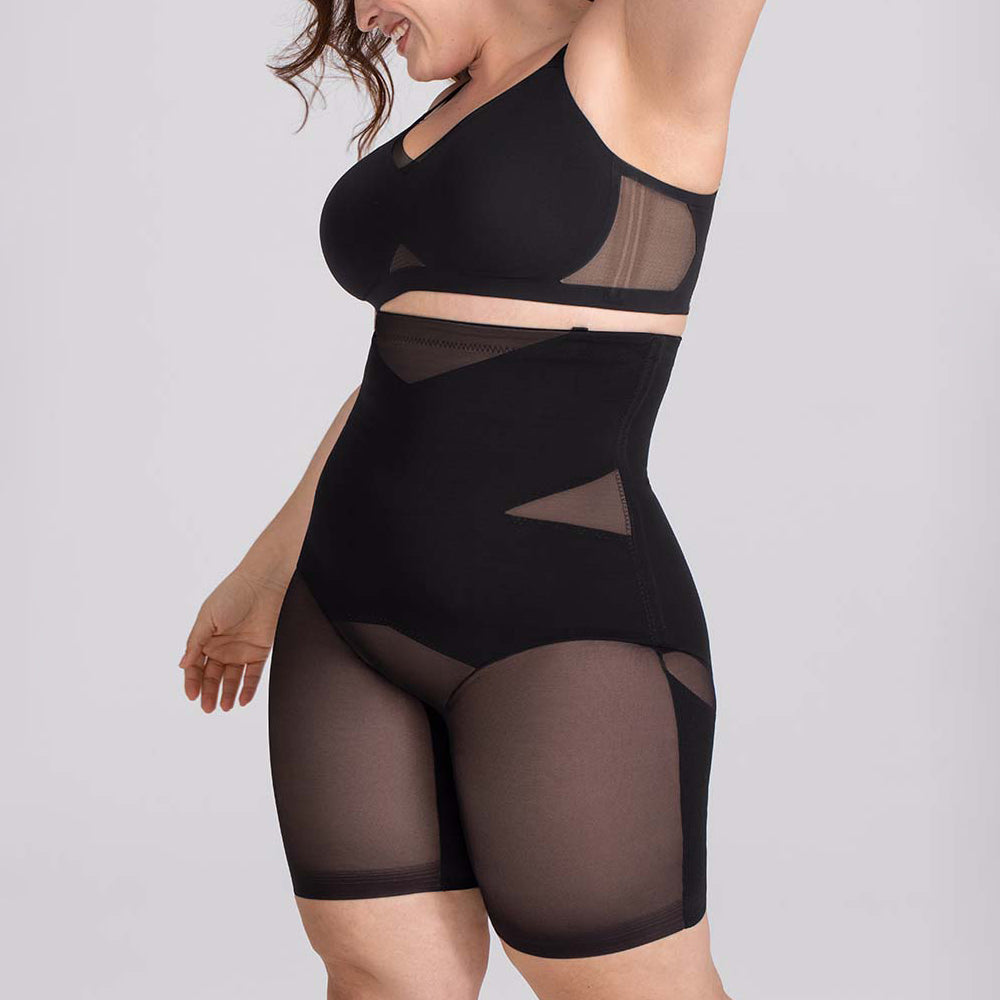
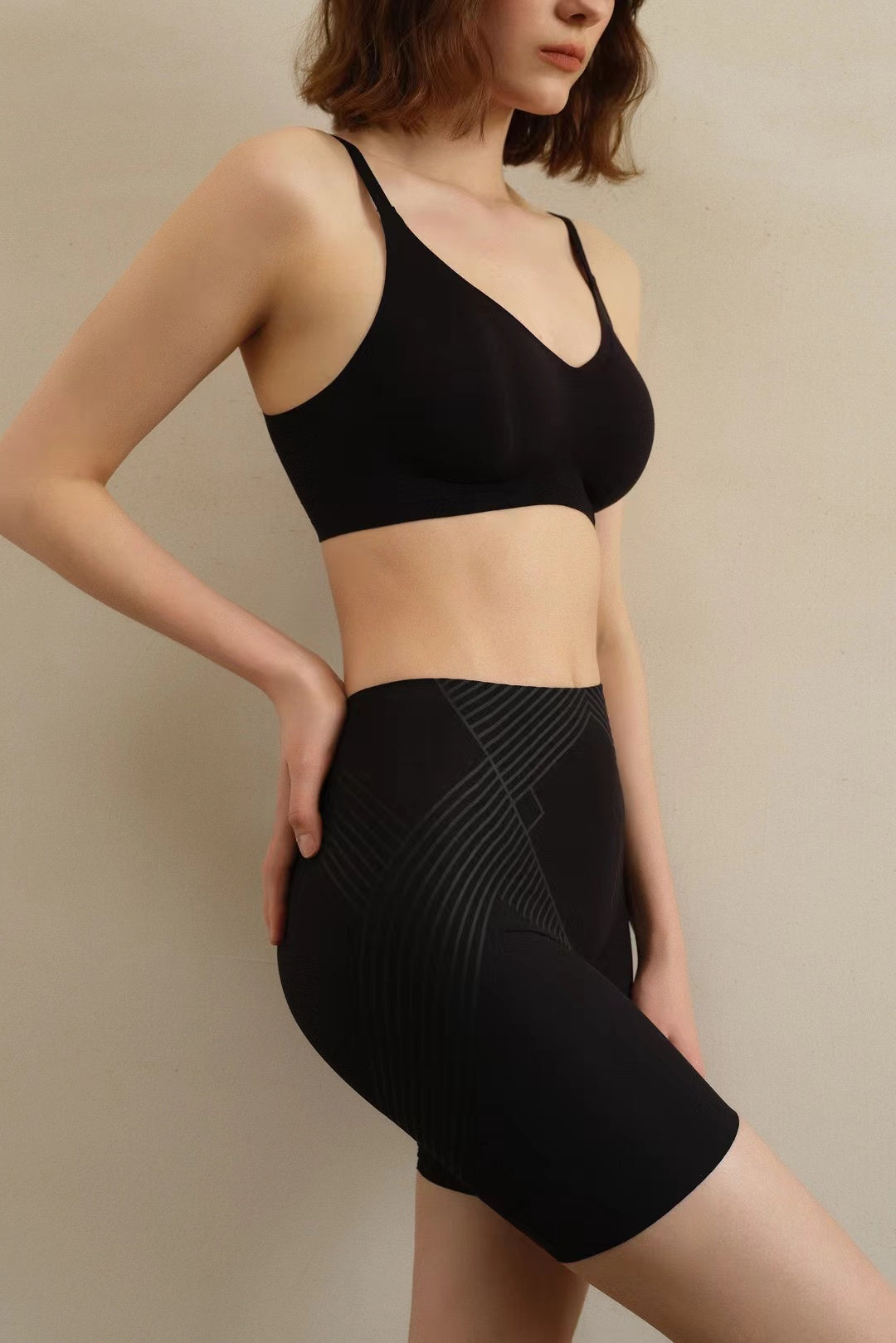
Seamless or circular knitting takes this a step further. Instead of cutting and sewing panels, the garment is knitted in a tube, with zones of different density built right into the knit. This allows firmer support in some areas and softer stretch in others without seams, which is why seamless construction is so popular in shapewear. You will see this principle in pieces like the SuperPower Sculpt Short, and you can learn more about how compression zones work in our shapewear guide.
Microfiber's strengths are smoothness, stretch, durability and easy care. Its limitation is that some microfibers are less breathable than natural fibers, so look for breathable blends or cotton gussets if you wear them all day in heat.
Cotton is a natural plant fiber known for being breathable, absorbent and gentle. It is a favorite for everyday briefs, sleep bras and gussets, and it is often recommended for sensitive skin. Pure cotton has little stretch and can lose its shape, so most lingerie cottons include a small percentage of elastane.
Modal is a semi-synthetic fiber made from beech wood cellulose. It feels silky-soft, drapes beautifully, resists pilling better than many cottons and handles moisture well. Modal is wonderful for loungewear, sleep sets and everyday briefs. It can be more delicate when wet, so gentle washing helps it last.
Elastane, also known as spandex or by brand names such as Lycra, is the fiber that gives lingerie its stretch and recovery. Even a small amount, often 5 to 20 percent, dramatically changes how a fabric behaves. Shapewear and power mesh can contain considerably more. Elastane is sensitive to heat and to body oils, lotions and chlorine, which is why hot dryers and harsh washing shorten the life of a bra band more than anything else.
A lining is a second layer inside the cup or panel. In bras, it may be a sheer mesh to add a little support without hiding the lace, a microfiber for smoothness, or a molded foam cup for shape and coverage. Unlined bras let lace and mesh show their full beauty and often suit smaller or wider-set shapes, while lined styles offer more coverage and structure.
The gusset is the small panel at the crotch of a brief or bodysuit. Look for gussets lined with cotton or another breathable fabric. It is one of the easiest ways to judge whether a pretty brief is also designed for comfort.
| Fabric | Breathability | Stretch | Care level | Best for |
|---|---|---|---|---|
| Leavers / Chantilly lace | High | Low | Delicate, hand wash | Special-occasion bras, overlays |
| Embroidered lace | Medium to high | Low to medium | Delicate, hand wash | Bra cups, garter belts, statement sets |
| Stretch lace / galloon | High | High | Gentle, mesh bag OK | Bralettes, briefs, everyday lace |
| Guipure lace | Medium | Very low | Delicate, hand wash | Corsets, bodysuits, trims |
| Silk satin | High | Low | Very delicate | Luxury sleepwear, slips |
| Polyester satin | Low to medium | Low to medium | Easy, gentle cycle | Babydolls, sets, sleepwear |
| Mesh / tulle | Very high | Medium to high | Gentle, snag-prone | Sheer panels, summer bras |
| Power mesh | High | High, firm | Gentle | Bra wings, shapewear panels |
| Microfiber | Medium | High | Easy | T-shirt bras, no-show briefs |
| Seamless knit | Medium | High | Easy to moderate | Shapewear, everyday basics |
| Cotton | Very high | Low (unless blended) | Easy | Everyday briefs, gussets, sleep bras |
| Modal | High | Medium | Gentle | Loungewear, sleep sets, basics |
In warm months, reach for open laces, mesh, cotton and modal, which let air circulate and dry quickly. Save heavier guipure, lined satin and thicker molded cups for cooler weather. In winter, satin sleepwear and fuller-coverage knits feel cozy and luxurious.
If your skin is easily irritated, prioritize smooth linings, cotton gussets, flat or covered seams and soft plush-backed elastics. Stretch lace tends to feel softer than non-stretch laces, and tag-free or printed labels avoid scratchy edges. Always wash new lingerie before wearing to remove any finishing residue.
Choose fabrics the way you choose words for someone you love: with care, with intention, and always with comfort in mind.
Whether you are shopping in person or reading a product page, these details separate lingerie that lasts from lingerie that disappoints.
Stylist tip: Delicate fabrics are not fragile if you treat them well. Rotating your pieces and washing gently will do more for longevity than any fiber choice.
For step-by-step instructions on keeping each of these materials beautiful, see our lingerie care guide.
Every fabric has a personality. Lace brings romance and texture, satin brings fluid glamour, mesh brings lightness and structure, microfiber brings invisible smoothness, and cotton and modal bring everyday softness. When you understand what each one does, you can build a lingerie wardrobe that feels as good at hour ten as it looks at minute one.
Now that you know what to look for, browse the full Daffanny collection and read each piece's composition with fresh eyes. You may just find your new favorite fabric.
No. Satin is a type of weave that creates a glossy surface, while silk is a natural fiber. Satin can be woven from silk, polyester or nylon, so always check the fiber content on the label.
Soft, breathable fabrics like cotton and modal, smooth microfiber linings and cotton-lined gussets are usually the gentlest choices. Look for covered seams and plush elastics, and wash new pieces before wearing.
Open mesh, tulle, stretch lace, cotton and modal all breathe well and dry quickly. Heavier satins and thick moulded cups are better saved for cooler weather.
Keep reading
From plunge to balconette to strapless, learn what each bra style does, which one to wear with every neckline, and how to build a small lingerie wardrobe that covers everything.
Read articleModern shapewear should smooth and support, not squeeze. Here is how to choose the right control level, style, and size so your shapewear feels as good as it looks.
Read articleKeep your bras, lace and satin beautiful for longer with our complete care guide to washing, drying, stain removal, storage and rotation.
Read articleYour bag